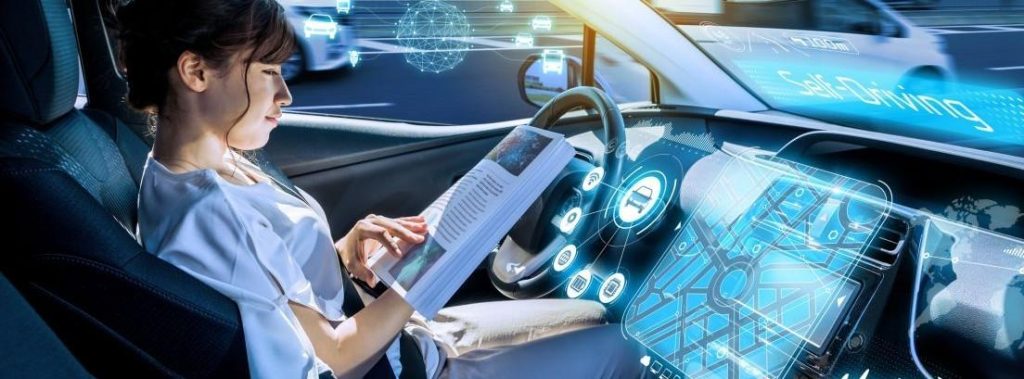
The arrival of autonomous vehicles promises to drastically reduce accidents, but it also opens a fascinating debate: what happens when the machine fails? For more than a century, road responsibility has been simple: the driver. But in a vehicle that makes decisions without human intervention, that logic breaks down. We’re no longer talking only about hands on the wheel, but about algorithms, sensors, suppliers, and software updates. The question stops being technical and becomes philosophical, legal, and economic.
Insurance companies are undergoing a major transformation. Traditionally, they calculated risk based on human behavior: driving history, age, area of residence. With autonomous cars, risk shifts toward the quality of the automated driving system. Should someone pay more for a car with a “less reliable” algorithm? Will there be specific policies for each manufacturer, just as today there are for each model? Some even wonder whether insurers will need access to the vehicle’s logs to reconstruct the accident—something that opens a debate about privacy and data ownership.
The role of manufacturers also becomes central. If a software failure causes an accident, is the brand responsible, or the supplier of the computer vision module, or the system integrator? In today’s automotive industry, a car is an ecosystem of components from multiple companies. An error in a LIDAR sensor made by a third party can trigger a chain of incorrect decisions. This forces a rethinking of civil liability: how do you distribute blame when the “driver” is a set of algorithms developed by different companies?
Owners are not left out of the debate. Even if they don’t drive, they remain responsible for maintaining the vehicle. What happens if an accident occurs because the user didn’t install a critical update? Or if they disabled safety features? The line between “use” and “control” becomes blurred. Just as an outdated phone is a risk, an autonomous car without updates could become a danger on the road. This opens the door to new legal obligations: mandatory updates, software audits, and periodic certification of the autonomous system.
Ultimately, responsibility in autonomous vehicles will not be binary but shared. A hybrid model where the owner, manufacturer, software provider, and insurer each have different roles depending on the type of failure. Technology is advancing faster than legislation, and the real challenge will be designing a legal framework that distributes blame fairly without slowing innovation. Because the question is not whether accidents will happen with autonomous cars, but how we will decide who must answer for them when they do.