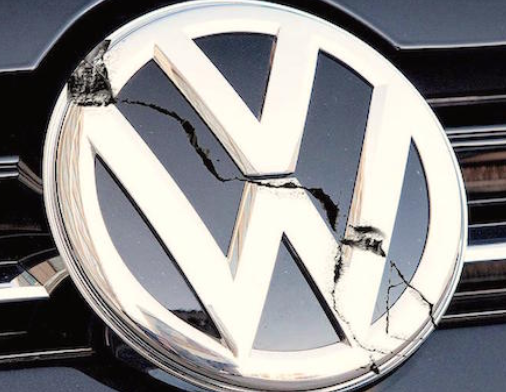
Volkswagen is facing massive layoffs of up to 100,000 workers and the possible closure of four plants in Germany, a move that symbolizes the severity of the structural problems affecting the German economy and industrial sector.
A symptom of a larger issue: Germany’s industry in decline
Volkswagen’s situation is not an isolated case but rather a reflection of a broader deterioration in Germany’s industrial economy. Since 2022, Germany has suffered a combination of factors that have eroded its competitiveness:
- A drop in industrial profits, especially in automotive, machinery, and chemicals.
- Excess production capacity in key sectors such as automotive, where Volkswagen acknowledges that its European plants could produce 500,000 more cars than needed.
- A transformation of the global market, with China pressuring prices and margins, and the United States imposing tariffs that affect European manufacturers.
- Weak international demand, which has reduced deliveries and profits for giants like Volkswagen, whose profits fell by 28% in 2026.
This set of factors has led to an unprecedented restructuring: model reductions, cuts in production capacity, and workforce adjustments that could exceed 50,000 layoffs in Germany alone before 2030.
The decisive role of energy costs since the start of the conflict in Ukraine The conflict between Russia and Ukraine, which began in February 2022, triggered an energy crisis that hit Germany particularly hard due to its historical dependence on Russian gas.
Direct impact on German industry:
- A multiplication of gas and electricity costs, critically affecting energy‑intensive sectors such as chemicals, metallurgy, automotive, and advanced manufacturing.
- Loss of competitiveness compared to the United States, where energy costs are much lower thanks to cheap natural gas.
- Increased regulatory and environmental costs, which Volkswagen describes as “headwinds worth tens of billions of euros.”
- Production relocation, with German companies shifting operations to countries with cheaper energy (U.S., China, Eastern Europe).
The automotive industry — which depends on large energy consumption in manufacturing, painting, and logistics — has been especially vulnerable. Rising energy costs have eroded margins and accelerated the need for cuts and restructuring.
How both phenomena are connected The energy crisis is not the only cause, but it is a decisive accelerator of Germany’s industrial deterioration:
- Soaring energy costs → higher production costs Volkswagen acknowledges that its costs remain 20% higher than those of global competitors.
- Reduced margins → need for massive cuts Falling profits and deliveries force reductions in workforce, plant closures, and a simplified model lineup.
- Lower competitiveness → loss of market share to China and the U.S. German industry is losing attractiveness as a production hub.
- Deep restructuring → layoffs and factory closures Volkswagen’s plan to eliminate up to 100,000 jobs and close four plants is the most visible manifestation of this crisis.
Conclusion The layoffs planned at Volkswagen are the tip of the iceberg of a German industrial crisis driven by:
- soaring energy costs since the conflict in Ukraine,
- global competitive pressure,
- excess production capacity,
- falling profits and demand,
- and an industrial model that no longer fits today’s market.
Germany’s economy, traditionally powered by its industrial strength, is facing a forced transformation that will shape the next decade.